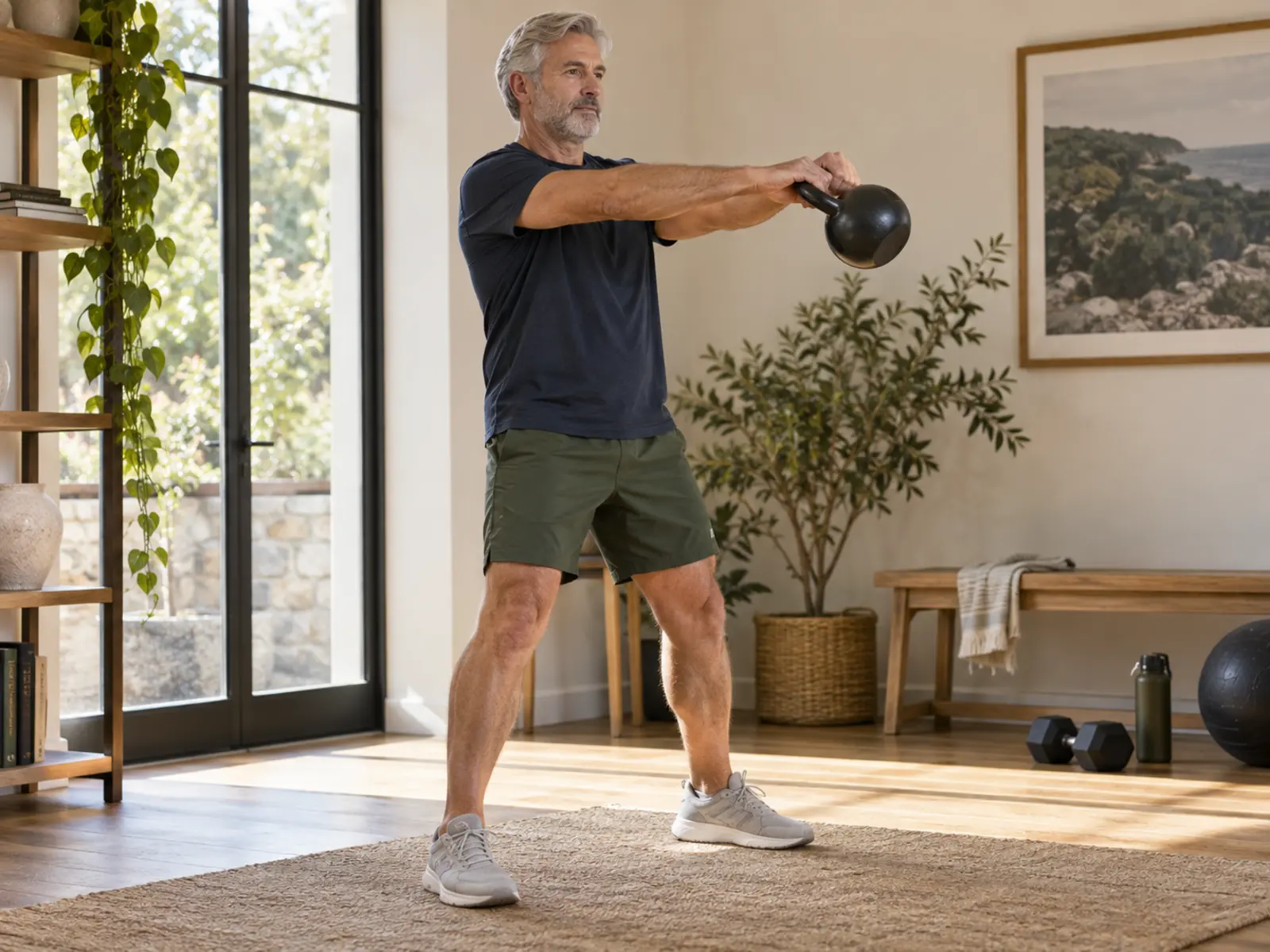
Bone health is easy to ignore because bone loss usually does not announce itself.
You can feel your muscles working. You notice when your balance improves or when climbing stairs becomes easier. Changes inside your skeleton are much less obvious. Yet bones are living tissue, and what happens to them over decades can influence how well you remain able to move, train and live independently later in life.
Some bone loss occurs with ageing. Even so, many of the influences on bone health remain relevant throughout adulthood.
For most people, three priorities deserve attention: give bones an appropriate reason to stay strong, provide the nutritional materials needed to maintain them, and reduce the chance that a fall turns declining bone strength into a fracture.
Your bones are living tissue
A skeleton may look permanent, but bone is continually being renewed.
Old or damaged bone is broken down and new bone is formed. Throughout life, these processes respond to hormones, nutrition, physical loading, illness, medications and other influences.
Bone mass generally reaches its highest levels earlier in adulthood. Later, the balance between formation and breakdown can shift, and bone mineral density may decline.
The pattern differs between people. Women often experience accelerated bone loss around and after menopause as oestrogen levels fall. Men also lose bone with age, although the pattern is usually more gradual. Genetics, body size, smoking, alcohol intake, physical activity, nutrition, certain medical conditions and some medications can all influence risk.
This is why two people of the same age can have very different bone health.
Why bone strength matters
The practical concern is fracture.
Osteoporosis makes bones more fragile and increases the likelihood that relatively minor trauma can cause a fracture. Hip and vertebral fractures in particular can have substantial consequences for mobility, function and quality of life.
Bone mineral density is an important part of assessing bone health. Fracture risk also depends on factors such as age, previous fractures and the likelihood of falling.
That wider view changes the goal. Protecting bone health involves supporting the skeleton itself while maintaining the strength, balance and physical capacity that help you move safely.
Bones respond to the loads placed on them
Physical activity gives bone a mechanical stimulus.
The type of stimulus matters. Research and clinical exercise guidance consistently place resistance training and appropriate impact activity among the exercise approaches most relevant to maintaining or improving bone strength.
Resistance training creates forces through muscles and joints as the body works against an external load. Impact activity exposes the skeleton to forces generated when the body contacts the ground. Depending on a person’s health and ability, that might range from relatively modest weight-bearing activity to more demanding jumping or hopping exercises.
These forms of loading can stimulate adaptation in bone. The response varies between skeletal sites and between people.
Evidence from a 2022 systematic review and meta-analysis of progressive resistance training in adults aged 65 and older showed clear improvements in muscle strength and an improvement in femur/hip bone mineral density. The pooled change at the lumbar spine was not statistically significant. Other reviews have also reported small positive effects at some bone sites.
Resistance training can therefore contribute to protecting bone and may improve bone mineral density at certain sites, with the size and location of the response varying across studies. It should not be viewed as a guaranteed way to restore bone that has already been lost.
Walking is valuable — but bone needs more than steps
Walking deserves a place in healthy ageing. It supports physical activity, cardiovascular health, mobility and many other aspects of health.
Its effect on bone is more limited.
Researchers reviewing walking and Nordic walking in adults aged 50 and older with low bone mineral density or elevated fracture risk found uncertain effects on many bone-related outcomes. Multicomponent programmes that included walking showed some benefit at the lumbar spine, while walking by itself was poorly represented and evidence for fracture prevention was insufficient.
Earlier reviews reached a similar conclusion: walking alone does not reliably protect bone mineral density at every important skeletal site.
Walking remains valuable physical activity. For bone health specifically, it may need to sit alongside resistance exercise and, where appropriate, impact or other weight-bearing activity.
Strength training helps in more than one way
Resistance training has an obvious relationship with muscle, and that connection also matters for bones.
Progressive resistance training can increase strength in older adults. Stronger muscles can make everyday tasks easier and help maintain physical function. Exercise programmes that include strength and balance work are also recommended for people with osteoporosis because falls are an important part of fracture risk.
This gives strength training two roles in a bone-health strategy. It can provide mechanical loading to the skeleton while helping preserve the physical abilities that contribute to safer movement.
The appropriate programme depends on the person. Someone who is already experienced with resistance exercise may tolerate loads and movements that would be inappropriate for a beginner or for someone with osteoporosis, previous vertebral fractures, poor balance or other medical considerations.
How much does exercise intensity matter?
Bone responds to loading, which makes exercise intensity an important consideration. The research does not support a simple rule that harder training always produces a better bone response.
Some studies and exercise guidelines support progressive higher-load resistance and impact exercise when it is appropriate and performed safely. Research published in Bone in 2024 reviewing high-velocity resistance training in older adults reported small improvements in bone mineral density at several sites.
A more recent comparison helps put intensity into perspective. A 2026 systematic review and meta-analysis of adults aged 50 and older found greater improvements in lower-body strength with high-intensity resistance training than with low-to-moderate-intensity training. For lumbar-spine and femoral-neck bone mineral density, however, the researchers found no statistically significant difference between the intensity approaches.
A useful bone-health programme therefore needs a meaningful loading stimulus that suits the person’s ability, health and fracture risk and can be progressed safely. The appropriate level will vary from person to person.
Balance matters because fractures are not only about bones
A stronger skeleton is valuable, and avoiding falls is another part of fracture prevention.
Falls become more common with age, and their consequences can be greater when bone strength is reduced. Exercise guidance for people with osteoporosis therefore includes balance and functional training alongside resistance exercise.
Balance work can take many forms depending on ability: narrowing the base of support, controlled stepping, changing direction or practising movements that challenge stability under safe conditions.
The objective is to maintain the physical control needed for everyday movement. For someone at high risk of falling, targeted strength and balance training may deserve particular attention and professional guidance.
Calcium: aim for enough
Bone contains a large amount of the body’s calcium, so adequate calcium intake matters throughout life.
Calcium can come from dairy foods, calcium-fortified foods, some fish, tofu prepared with calcium, and various plant foods. What someone needs from supplements depends partly on how much they already obtain through food and on their individual health circumstances.
Increasing calcium intake indefinitely is not a substitute for understanding total intake or fracture risk. A food-first approach is often practical when adequate intake can be achieved through diet, while supplements may be appropriate for some people when intake is insufficient or a clinician recommends them.
Calcium is one part of a wider bone-health picture.
Vitamin D has an important role — with an important qualification
Vitamin D helps the body absorb calcium and contributes to normal bone and muscle function. Deficiency therefore deserves attention.
Supplementation is a separate question. Its effect depends on factors including baseline vitamin D status, dietary intake, age, living circumstances and clinical risk. Someone who is deficient is in a different situation from someone who already has adequate vitamin D status.
The sensible objective is adequacy instead of treating a supplement as universal fracture insurance.
People with known deficiency, osteoporosis, malabsorption, limited sun exposure or other relevant medical circumstances may need individual assessment and advice.
Protein belongs in the bone-health conversation too
Protein is often discussed in relation to muscle, but bone is partly a protein-based tissue and healthy ageing requires both skeletal and muscular support.
Adequate protein also helps preserve muscle mass and function. That matters because muscles generate some of the forces that load bone, and muscle strength contributes to mobility and physical resilience.
Protein belongs within the wider nutritional picture for bone health. A varied diet that provides sufficient energy, protein, calcium and other micronutrients gives the body the materials it needs to maintain both muscle and bone.
Smoking and heavy alcohol use can work against bone health
Lifestyle influences extend beyond exercise and food.
Smoking is associated with poorer bone health and greater fracture risk. Higher alcohol intake can also contribute to fracture risk through several pathways, including effects on bone and an increased likelihood of falls.
Reducing these exposures can therefore form part of protecting bone over time. Bone health reflects accumulated influences across years.
When should you pay more attention to your bone health?
Because osteoporosis can remain silent until a fracture occurs, waiting for symptoms is not a reliable screening strategy.
Age, sex, menopausal status, previous fractures, family history, low body weight, smoking, alcohol use, certain medical conditions and long-term use of some medications can all influence risk.
A fracture after a relatively minor fall or impact deserves medical attention. So can noticeable height loss, unexplained back pain or other circumstances that raise concern about vertebral fracture.
Whether and when someone should have bone-density testing depends on age and individual risk factors. Screening recommendations also vary between countries and professional bodies.
If you are concerned about osteoporosis or have significant risk factors, a clinician can assess whether bone-density testing or a formal fracture-risk assessment is appropriate.
What if you already have osteoporosis?
Exercise can remain an important part of life after an osteoporosis diagnosis, although the programme may need to change.
Consensus guidance supports resistance and balance training for people with osteoporosis. Appropriate impact activity may also be useful, but fracture history, spinal health, balance and individual capacity affect what is safe.
People with vertebral fractures or multiple low-trauma fractures may need lower-impact exercise and more specific guidance. Certain movements involving substantial spinal flexion may also need modification in people at elevated vertebral-fracture risk.
Individualisation matters here. Someone with diagnosed osteoporosis, previous fragility fractures or significant fall risk may benefit from guidance from a clinician or appropriately qualified exercise professional before substantially increasing exercise intensity or introducing unfamiliar impact training.
Think BUILD, PROTECT, KEEP
A useful way to think about bone health is to focus on what you want your body to remain capable of doing.
BUILD enough strength and physical capacity to challenge muscle and bone appropriately.
PROTECT your skeleton by supporting adequate nutrition, reducing avoidable risks and addressing fall risk.
KEEP using those capacities over time.
Bone responds to ongoing conditions. Exercise benefits are difficult to preserve indefinitely if the stimulus disappears, just as muscle strength declines when training stops.
Looking after bone is therefore something that continues across the years.
The bottom line
Ageing changes bone, but the trajectory is influenced by more than age alone.
Resistance training and appropriate weight-bearing or impact activity can help support bone strength. Balance and muscle strength matter because fracture risk also involves falls. Adequate calcium, vitamin D, protein and overall nutrition support bone maintenance, while smoking, heavy alcohol use and individual medical risks deserve attention.
Walking remains excellent physical activity, although bone benefits may require additional forms of loading.
The goal is to preserve the strength and physical capacity that help your skeleton support the life you want to keep living.
Sources & Further Reading
- Progressive Resistance Training for Concomitant Increases in Muscle Strength and Bone Mineral Density in Older Adults: A Systematic Review and Meta-Analysis — Sports Medicine, 2022
- Strong, steady and straight: UK consensus statement on physical activity and exercise for osteoporosis — British Journal of Sports Medicine, 2022
- Position Statement: Exercise Guidelines for Osteoporosis Management and Fall Prevention in Osteoporosis Patients — Journal of Bone Metabolism, 2023
- The Effects of Walking or Nordic Walking in Adults 50 Years and Older at Elevated Risk of Fractures: A Systematic Review and Meta-Analysis — Journal of Aging and Physical Activity, 2021
- The effects of high velocity resistance training on bone mineral density in older adults: A systematic review — Bone, 2024
- Effectiveness of High-Intensity Versus Low-To-Moderate-Intensity Resistance Training in Improving Muscle Strength and Bone Mineral Density in Older Adults: A Systematic Review and Meta-Analysis of Randomized Controlled Trials — Geriatrics & Gerontology International, 2026