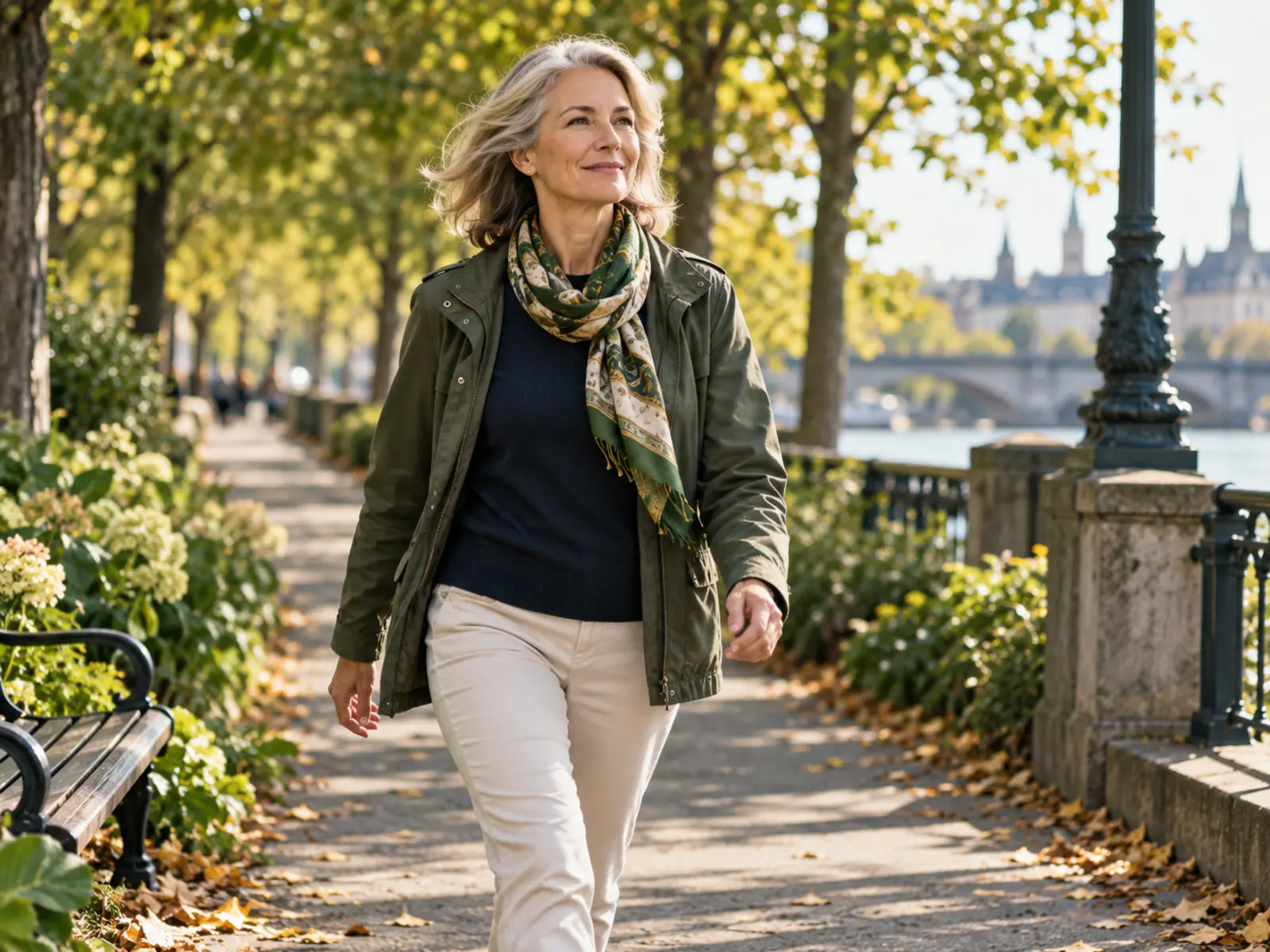
Take a familiar 30-minute walk and change just one thing: the pace.
The route stays the same. So does the time spent outside. But if you begin walking with enough purpose that your breathing picks up, the physical demand changes.
That makes pace an interesting part of the walking conversation. Step counts tell us something about how much movement we accumulate. Pace, cadence and intensity tell us something about how demanding some of that movement is.
Research suggests both can matter. It is particularly convincing that people who walk faster tend to have better long-term health outcomes, although that does not tell us how much benefit an individual will gain by deliberately speeding up. Device studies have also produced different answers about how much stepping intensity contributes once total daily steps are considered.
A large new study published in September 2026 adds another piece: step volume and stepping intensity may work in different combinations rather than competing for a single “best” target.
So the useful question is not simply whether fast walking beats slow walking. It is what pace changes about an activity many people already do.
Changing pace changes the work
As walking speed increases, the body generally has to supply more energy per minute. Muscles contract more frequently, oxygen demand rises and the cardiovascular system responds to the greater workload.
At a sufficient effort, ordinary walking becomes moderate-intensity physical activity.
There are several ways to increase the dose of a walk. You might stay out longer, cover more distance or walk more frequently across the week. Increasing the effort during some of the minutes changes the dose in another direction.
This is useful because it does not require walking to become a specialised workout. The same trip to the shops or familiar neighbourhood route can contain periods that are easy and periods that ask more of you.
What faster walkers tell us — and what they don’t
The long-term observational evidence is hard to ignore.
Liu and colleagues combined 13 cohort studies involving 530,841 participants in a 2024 systematic review and meta-analysis. Compared with people in the slowest walking-speed categories, those in the fastest categories had a 43% lower relative risk of all-cause mortality. Mortality risk also declined across increasing measured walking speeds.
The studies did not all measure pace in the same way; the meta-analysis included both self-reported and directly measured walking-speed data.
That matters because this research compares people who already differ in walking speed. It does not randomly assign people to speed up and then observe whether doing so prevents deaths.
Faster walkers can differ from slower walkers in fitness, muscular strength, mobility, underlying disease and general health. Walking speed can therefore reflect health as well as potentially contribute to it.
Imagine two people whose usual walking speeds differ substantially. One has high cardiorespiratory fitness and no mobility limitations. The other has arthritis and heart disease. Their walking speeds tell us something, but changing the second person’s pace does not automatically make the rest of those differences disappear.
For an individual walker, the study establishes an association worth understanding. It cannot tell us the size of the benefit that would follow from deliberately walking faster.
Sometimes slow pace is information
Clinicians have long been interested in walking speed partly because it can reveal something about physical function.
Pain, frailty, low fitness, balance problems and heart or lung disease can all affect how quickly someone naturally walks. This creates a difficult problem in long-term observational research: poorer health can contribute to slower walking while also increasing the likelihood of later illness or death.
Researchers use statistical adjustments and other methods to reduce this problem, but they cannot remove every possible influence.
That changes how we should read a headline saying faster walkers live longer. It gives us a reason to be interested in pace without turning slow walking into a harmful behaviour that everyone should simply correct by speeding up.
For someone whose mobility is limited, the most useful walking pace may look quite different from the pace of a fit recreational walker.
When movement is measured rather than recalled
Wearable devices have given researchers another way into the problem.
One influential US study fitted 4,840 adults aged 40 and older with accelerometers for up to seven days and then followed mortality. Higher daily step counts were strongly associated with lower mortality. Once total steps were taken into account, however, higher stepping intensity was not significantly associated with lower mortality.
Research involving 16,741 older women reached a broadly similar result. Step volume was associated with mortality, while most of the apparent advantage of greater stepping intensity weakened after adjustment for total steps.
Taken together, these two studies put considerable weight on the amount of movement accumulated. Other device studies allow us to examine whether intensity might contribute additional information.
A UK Biobank analysis of 78,500 adults aged 40–79 found lower risks across several outcomes as daily steps increased. In that study, researchers measured peak 30-minute cadence — the average steps per minute across the 30 highest, not necessarily consecutive, minutes of the day.
Higher peak cadence remained associated with lower risks even after total daily steps were considered.
The device evidence therefore leaves a genuine research question about intensity. Total step volume has the more consistent association across these studies; the size and independence of the intensity association varies with the dataset and analysis.
A new study looks at volume and intensity together
A September 2026 study approached the question differently.
Wei and colleagues used UK Biobank device data to examine combinations of daily steps and peak 30-minute cadence, rather than treating volume and intensity as isolated alternatives.
The full dataset included 103,684 participants. In the all-cause mortality analysis, 64,743 eligible participants contributed 1,697 deaths. Researchers grouped daily steps into fewer than 5,000, 5,000–7,500, 7,500–10,000 and more than 10,000 per day, then examined mortality risk across different levels of peak cadence.
Different combinations were associated with lower mortality risk. Among people accumulating relatively few daily steps, greater peak cadence was associated with lower risk; accumulating more steps at a lower cadence could also be associated with lower risk. The lowest all-cause mortality risk in the analysis appeared within the 7,500–10,000-step group at around 100 steps per minute of peak-30 cadence.
Because this was observational research, the combinations are associations rather than tested prescriptions. The study adds evidence that volume and intensity can be considered together when researchers examine walking patterns.
For everyday walking, this broadens the picture. Increasing the amount of movement is one route to a higher activity dose. Increasing the effort of some existing walking is another possibility when that is appropriate for the individual.
Speed, pace, cadence and intensity describe different things
Walking research uses several terms that sound interchangeable until you look closely.
Speed describes how quickly you cover distance, such as kilometres per hour.
Pace expresses the same movement from the other direction — the time needed to cover a distance, such as minutes per kilometre.
Cadence counts steps per minute.
Intensity describes the physiological demand the activity places on you.
Cadence and speed are related because taking steps more frequently often helps a person move faster. Stride length, height and walking mechanics also contribute, so the relationship is not fixed.
Intensity adds another layer. Two people can walk side by side at the same ground speed while experiencing very different levels of effort.
That is why walking advice becomes less useful when a population average is turned into a universal target.
Where 100 steps per minute comes from
The number 100 steps per minute appears frequently in brisk-walking advice because researchers have studied cadence as a practical indicator of moderate-intensity activity.
A substantial body of cadence research suggests that about 100 steps per minute is a useful rounded reference for absolutely defined moderate-intensity walking in many adults.
The CADENCE-adults study of people aged 41–60, for example, found that approximately 100 steps per minute corresponded to an intensity of about 3 metabolic equivalents (METs), a standard absolute threshold for moderate intensity.
People differ in fitness, age and health, so this number works best as a rough reference. A cadence that represents moderate effort for one person may feel easier or harder to another, particularly when we are interested in relative intensity — how demanding the activity is for that individual.
You also do not need to spend a walk staring at a step counter. Cadence is useful when you like numbers; it is not a requirement for walking effectively.
Your breathing can tell you plenty
There is a simpler way to recognise a change in effort.
As a walk becomes moderately demanding, breathing becomes more noticeable while the effort remains sustainable. The familiar talk test uses this response: conversation is still possible, but talking continuously is less effortless than it would be during a gentle stroll.
This naturally adapts to the walker.
A fit 45-year-old may need a substantially faster ground speed to reach that effort than an older adult with lower fitness. Hills can raise the demand without any increase in speed at all.
For everyday walking, that makes perceived effort a useful companion to numbers such as cadence or kilometres per hour.
There is still a place for easy walking
None of this requires every walk to become brisk.
A comfortable walk can add movement to a day that would otherwise contain more sitting. It can be appropriate for someone beginning to become more active, managing limited mobility or simply using walking for transport and daily life.
Brisk walking has a different role. When someone is capable of increasing the effort appropriately, faster periods can add a stronger physiological challenge without requiring a different activity.
You might walk gently while talking to a friend, move quickly between appointments and take a more purposeful walk later. Easy and brisk walking can therefore sit naturally within the same day.
Using pace without turning walking into a performance test
If you already have a walking routine, pace becomes one of several things you can adjust.
Consider a 30-minute route you complete comfortably. On some days you may simply walk it. On others, you might allow part of the route to become brisk enough that breathing noticeably increases before returning to an easier pace.
That is practical synthesis rather than a claim that one particular brisk/easy combination has been proven optimal.
The same principle applies if you prefer numbers. A cadence near 100 steps per minute can provide a rough reference for moderate-intensity walking, but your own response to the effort still matters.
Increasing duration or frequency remains another option. The newer evidence on combinations of volume and intensity gives researchers another reason to study both dimensions rather than reducing walking to a single target.
When pace should not be the target
Walking faster is only useful when greater effort is appropriate for the person doing it.
Mobility limitations, pain, balance, medication effects and cardiovascular or respiratory conditions can all influence a suitable pace. Anyone who develops chest discomfort, unusual breathlessness, dizziness or other concerning symptoms with exertion should not use a cadence or speed target as a reason to continue pushing. Specific advice from a health professional also takes precedence over a generic walking target.
For those who can increase the effort comfortably and safely, pace remains one available way to make walking more physically demanding.
The bottom line
Walking faster increases the physiological demand of walking. Observational research also consistently finds that faster walkers tend to have better long-term outcomes, although some of that relationship may reflect differences in fitness, mobility and underlying health.
The evidence becomes more interesting when devices measure both volume and intensity. Some studies suggest that the number of daily steps explains much of the association, while others find an additional association with stepping intensity. New 2026 evidence examining the two together suggests that different combinations of step volume and pace may be associated with lower mortality risk.
For someone who already walks and can safely increase the effort, brisker periods are a practical way to make some walking more demanding. Around 100 steps per minute can serve as a rough reference for moderate-intensity walking in many adults, while breathing and perceived effort provide a more individual guide.
Easy walking still has a place alongside those more demanding minutes. How much you walk and how hard some of that walking feels are two dimensions you can adjust according to your circumstances.
Sources & Further Reading
- Liu Y, Xu L, Xu Y, Chen T, Zhu G, Chen Y. — “Dose-response association between walking speed and all-cause mortality: A systematic review and meta-analysis of cohort studies” — Journal of Sports Sciences, 2024.
- Saint-Maurice PF, Troiano RP, Bassett DR Jr, et al. — “Association of Daily Step Count and Step Intensity With Mortality Among US Adults” — JAMA, 2020.
- Lee IM, Shiroma EJ, Kamada M, Bassett DR, Matthews CE, Buring JE. — “Association of Step Volume and Intensity With All-Cause Mortality in Older Women” — JAMA Internal Medicine, 2019.
- del Pozo Cruz B, Ahmadi MN, Lee IM, Stamatakis E. — “Prospective Associations of Daily Step Counts and Intensity With Cancer and Cardiovascular Disease Incidence and Mortality and All-Cause Mortality” — JAMA Internal Medicine, 2022.
- Wei L, Ahmadi MN, Koemel NA, Biswas RK, del Pozo Cruz B, Stamatakis E. — “Combinations of stepping intensity and daily step counts against all-cause and cardiovascular disease mortality: insights from a device-based prospective study” — British Journal of Sports Medicine, 2026.
- Tudor-Locke C, Han H, Aguiar EJ, et al. — “How fast is fast enough? Walking cadence (steps/min) as a practical estimate of intensity in adults: a narrative review” — British Journal of Sports Medicine, 2018.
- Tudor-Locke C, Ducharme SW, Aguiar EJ, et al. — “Walking cadence (steps/min) and intensity in 41 to 60-year-old adults: the CADENCE-adults study” — International Journal of Behavioral Nutrition and Physical Activity, 2020.